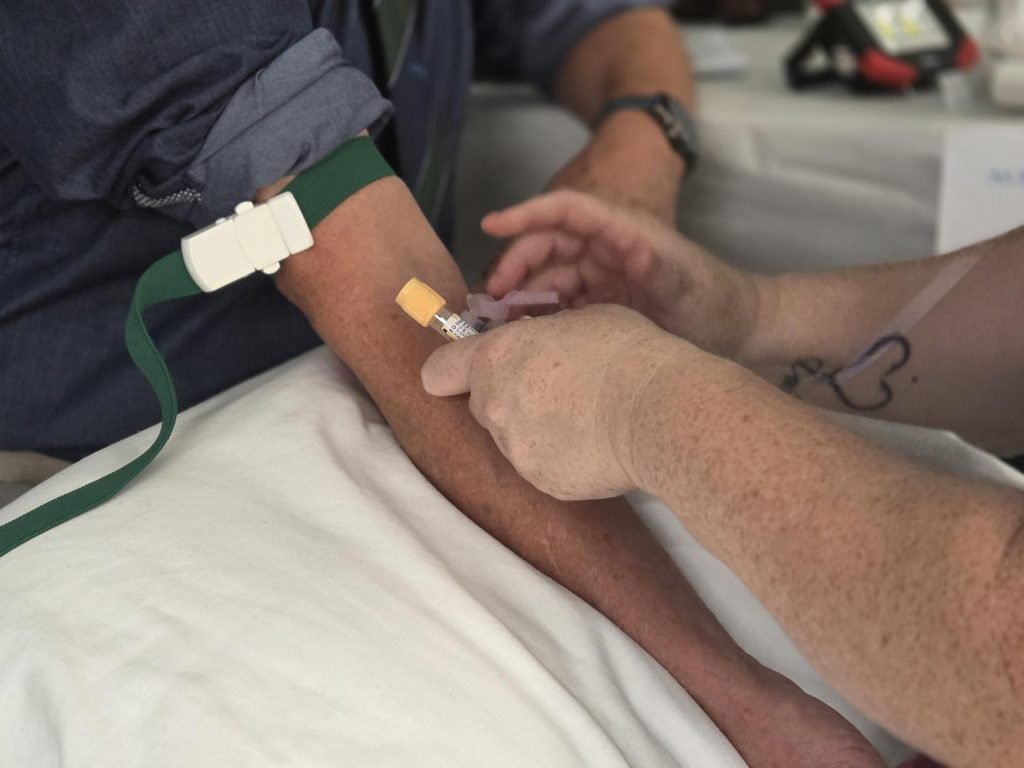
Farmers over 40 are invited to book a free Prostate-Specific Antigen (PSA) test at Bakewell Market and Shrewsbury Market in November. The tests will be delivered by The Graham Fulford Charitable Trust. Attendees will need to book their PSA test in advance via the links below, using the code FCN26:
- Bakewell Market (Monday 23rd November – 8:30am – 1:30pm): https://www.mypsatests.org.uk/Events/?a7f17769-0398-4975-995a-a802f54d139b
- Shrewsbury Market (Tuesday 24th November – 8:30am – 1:30pm): https://www.mypsatests.org.uk/Events/?5f960517-aac1-41df-8f1e-0238ca9e12e2
We are involved in a UK-wide partnership with Macmillan Cancer Support called the Rural Communities Cancer Project, which is helping to improve the support available to those living with cancer in farming communities and rural areas.

As part of this partnership FCN is working closely with Macmillan Cancer Support, including raising awareness in rural communities of the signs and symptoms of cancer and building referral bridges to and from Macmillan’s services.
Farmers, farm workers and people living in rural communities can have lower access to cancer services and support due to the nature of their work and rural life in often isolated areas.
Farmers can be particularly at-risk of certain types of cancer – such as skin cancer, prostate cancer, or cancers caused by exposure to carcinogens.
Cancer can impact a family business that may employ many people and can have significant impacts on an individual and their families – including their housing and extended family situation, or immediate welfare issues for livestock.
- FCN can be contacted in confidence on 03000 111 999, 7am-11pm, 365 days of the year. Speak to an empathetic volunteer who understands farming life.
- The Macmillan Support Line is available on 0808 808 00 00, seven days a week, 8am to 8pm.
Further information about cancer and support available is available on FCN’s FarmWell website:

- FarmWell: farmwell.org.uk/cancer/
- FarmWell Wales: farmwell.wales/cancer-support/
If you or your organisation would like to work with us to help to support people with cancer in farming/rural communities, email Alex Phillimore on alex@fcn.org.uk.
Access a glossary of medical terms related to cancer here: Glossary of medical terms related to cancer – Norfolk & Waveney Integrated Care System (ICS
Sign up to our newsletters to stay in the loop with our partnership with Macmillan Cancer Support
Join the Macmillan Online Community
There is now a thread on the Macmillan Cancer Support online community tailored to people in farming with lived experience of cancer (either personally or a loved one).
This is an opportunity to share experiences with people who have been in a similar situation, as well as support one another. Access the thread here: Farming, rural communities and cancer – Macmillan Online Community
Signing up to Macmillan’s Online Community is quick and anonymous.
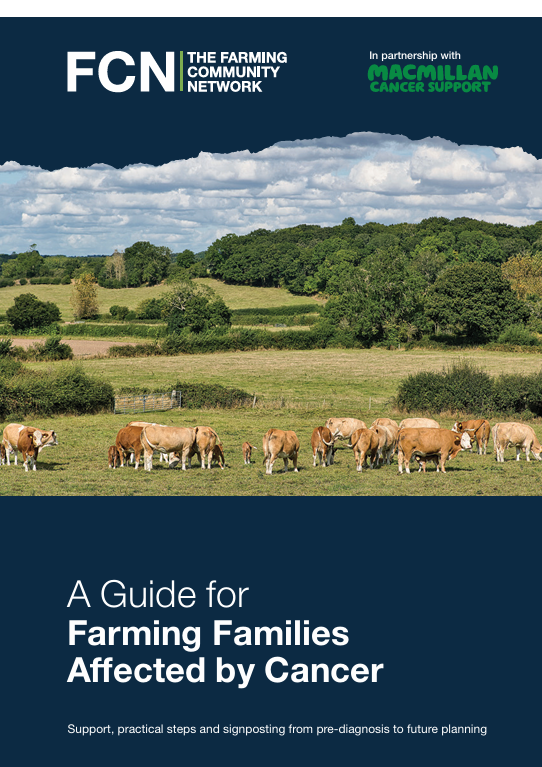
Download our ‘Farming with Cancer’ guide
Download our ‘A Guide for Farming Families Affected by Cancer’ booklet.
This document has been developed by people within the farming community who have direct experience of living with cancer and undergoing cancer diagnoses, treatment and aftercare. We understand that living with cancer while running a farm presents unique emotional, physical, and practical challenges.
This document offers clear and compassionate guidance for farmers navigating treatment, recovery and day-to-day work. It offers practical suggestions, reassurance and signposting to support and includes
information and guidance about:
- Pre-diagnosis
- Post-diagnosis (pre-treatment)
- Treatment
- Post-treatment
- Planning for the future
- Help and support
England publication:
Wales publications:
Resources (‘Nip it in the Bud’ campaign)
Our storytellers
As part of this project, many within our community have shared their cancer stories – helping to reduce stigma and encouraging early detection:
Nicky Maynard is a farmer’s wife, originally from Cork in the Emerald Isle, and now lives with her husband and family in Warwickshire. In January 2017 she felt a lump in her right breast but initially delayed going to the GP, as she felt fine and there wasn’t a female GP available for a few weeks. After eventually seeing a GP, she quickly received ultrasounds and biopsies and was diagnosed with breast cancer. Click here to watch Nicky’s video.
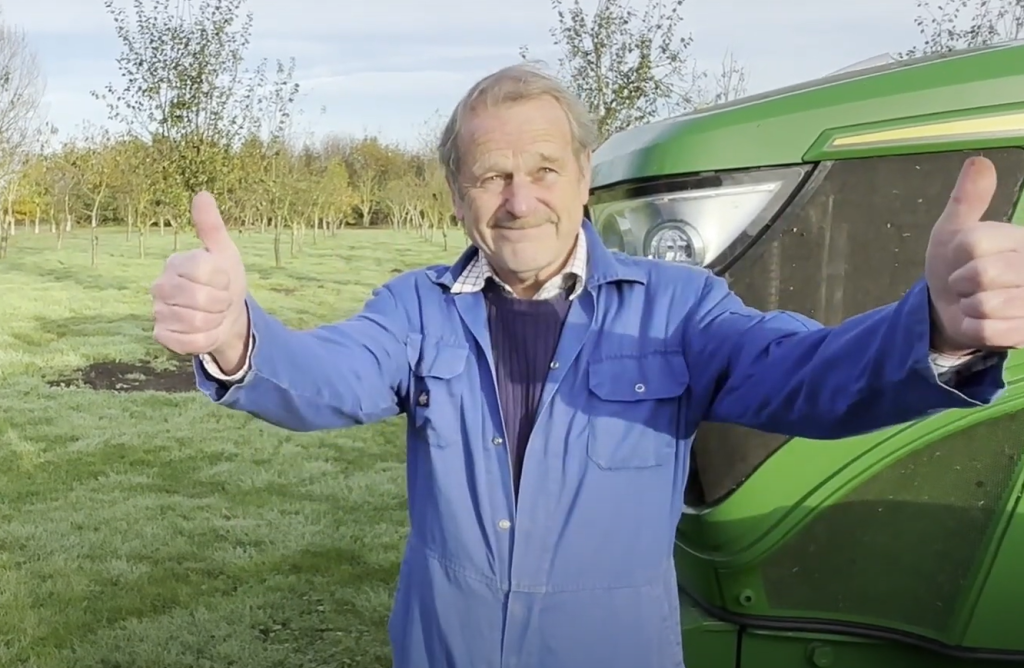
Denys Fell farms 250 mainly arable acres in East Yorkshire. In June 2024 at the age of 73 he went for a routine blood test. After the medical team noticed an elevated Prostate-specific antigen level (PSA) in his blood, Denys was referred for additional tests. He was diagnosed with prostate cancer days later. Click here to read Denys’s story and watch his video.
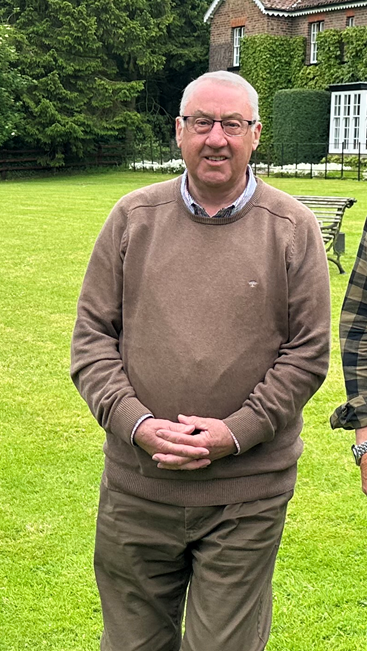
Stewart Houston, chair of the Red Tractor Pigs Board, was due his usual practice nurse annual check-up. His wife, Janet encouraged him to ask for a PSA (Prostate Specific Antigen) test. Despite having no symptoms, further tests showed that Stewart had advanced prostate cancer. Click here to read Stewart’s story.
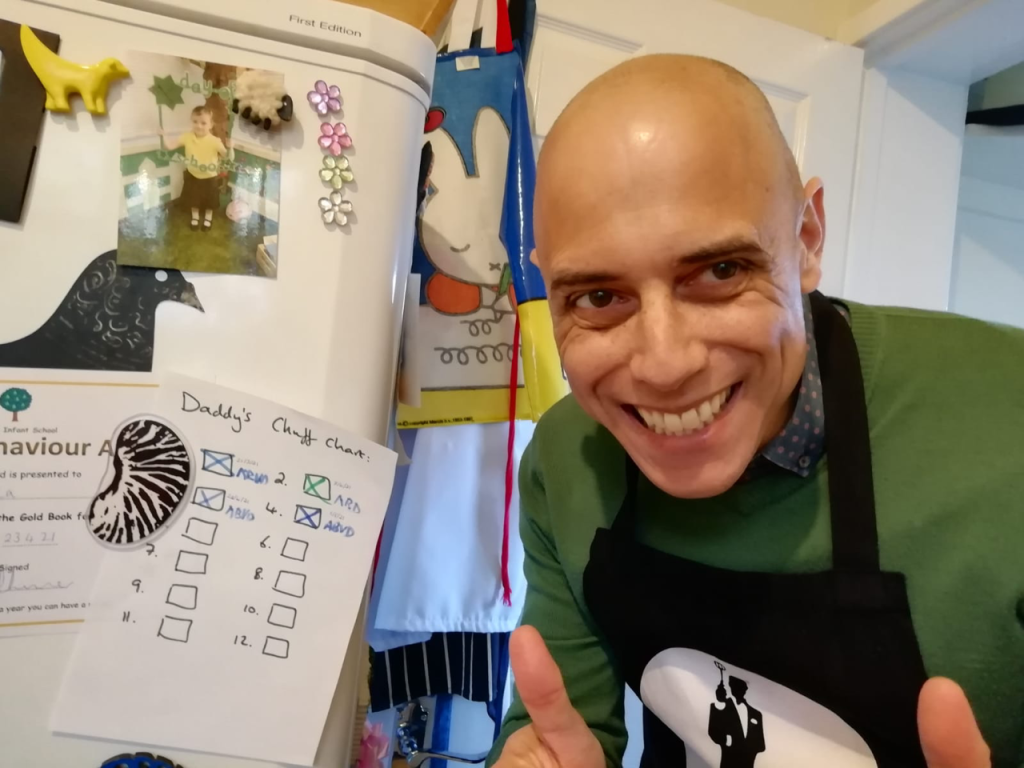
Professor Mario Caccamo is CEO of Niab, having started his role in October 2021. Mario was diagnosed with Hodgkin lymphoma that same year. Hodgkin lymphoma is an uncommon cancer that develops in the lymphatic system, which is a network of vessels and glands spread throughout your body. Click here to read Mario’s story and watch his video.
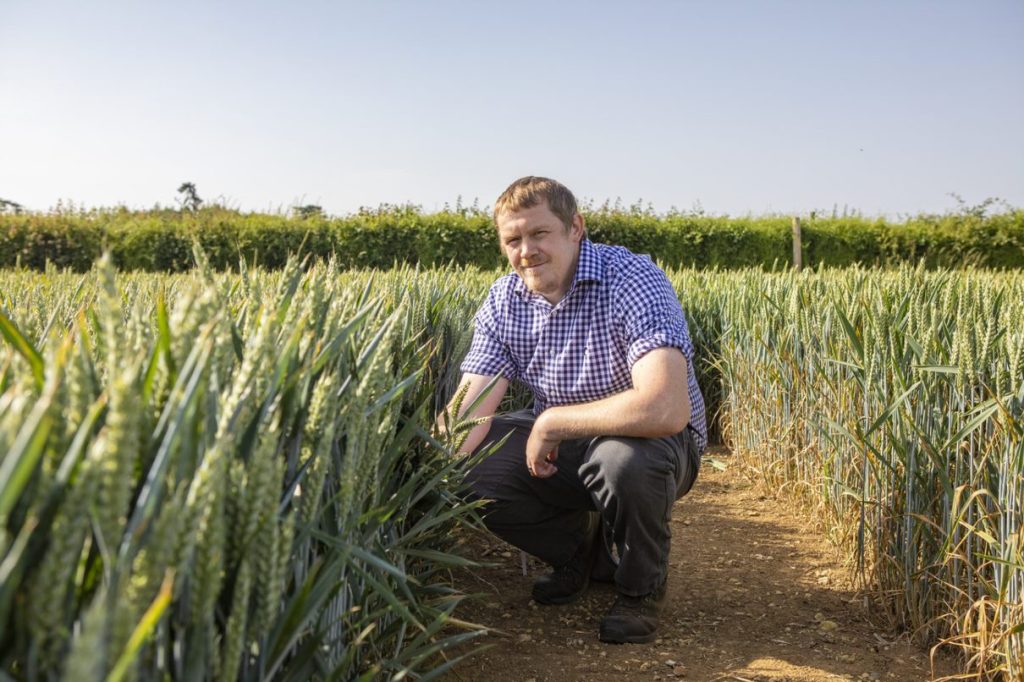
Pete Waltham is an agronomist with Agrovista. In October 2024 Pete was diagnosed with a head and neck cancer in his tonsils at the age of 42, after noticing a small lump in his neck in June. Click here to read Pete’s story.
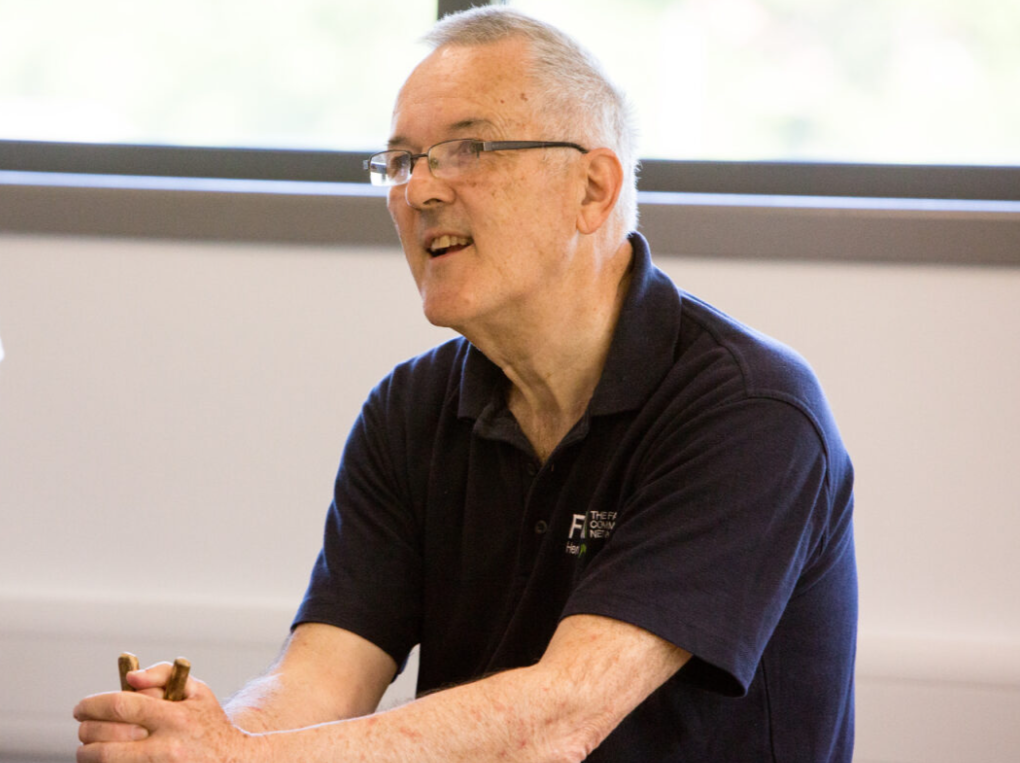
Graham Ashford is FCN’s Regional Support Officer (West Midlands). In 2025 he heeded the advice of FCN’s #NipItInTheBud campaign with Macmillan Cancer Support, which motivated him to request a series of further tests with his GP following a routine blood test. Despite having no symptoms, this test showed a raised Prostate Specific Antigen (PSA) level. Doctors investigated further and Graham had an MRI scan followed by a biopsy, which confirmed he had prostate cancer. Click here to read Graham’s story and watch his video.
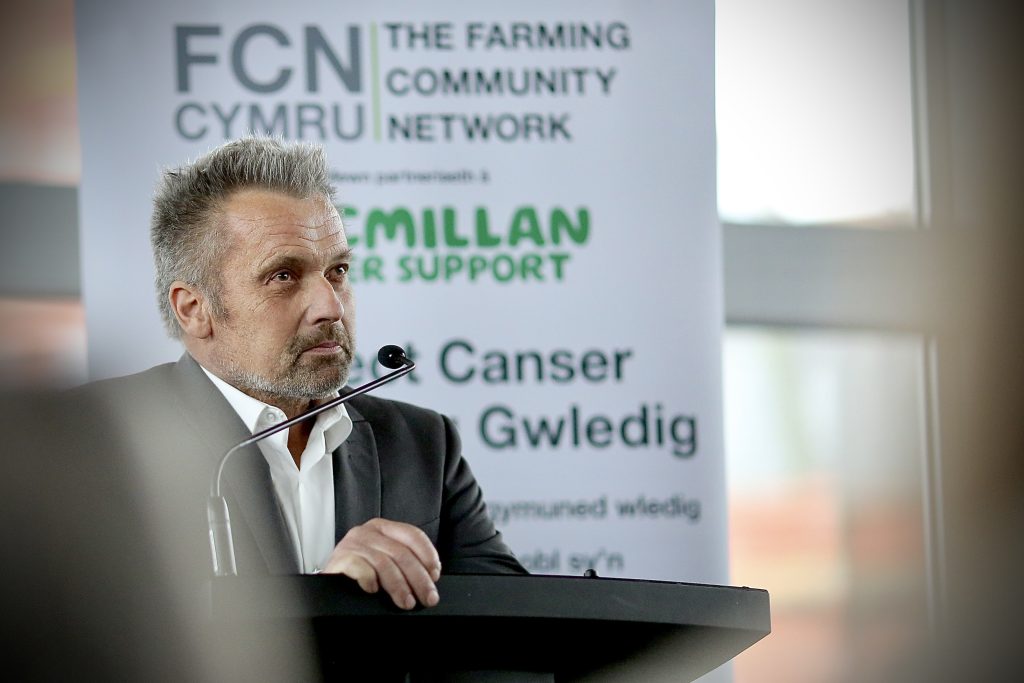
Welsh farming contractor John Saunders Davies found he was going to the toilet more often and felt that things were ‘pulling’ on his stomach. After a test found blood in his stool, follow-up tests discovered a tumour in his intestine and John was diagnosed with bowel cancer. Click here to read John’s story and watch his video (in Welsh with subtitles).
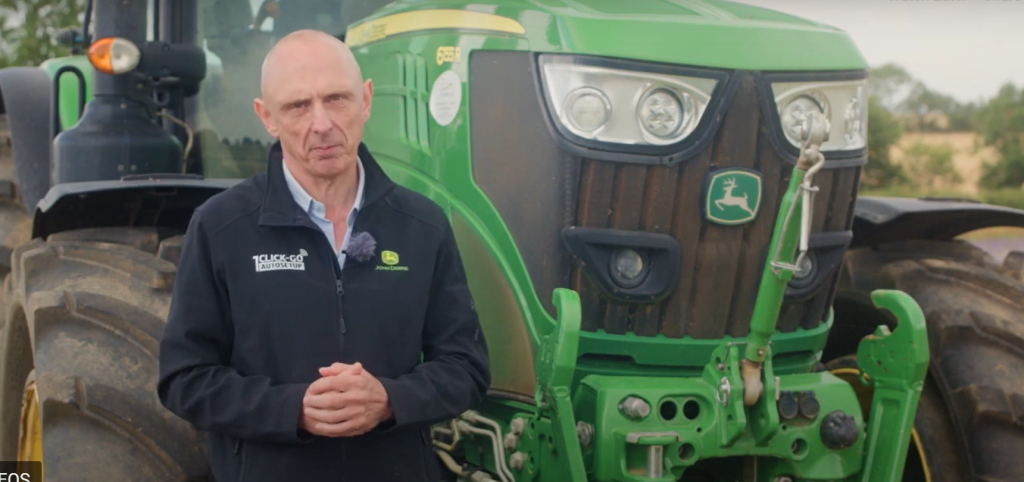
David Purdy is a Business Manager with John Deere. In late 2023, David began experiencing difficulty swallowing food. The doctor suspected acid reflux and prescribed medication, but the problem persisted. By February 2024, David was referred to the hospital, where an endoscope revealed a diagnosis of cancer of the lower oesophagus. Click here to read David’s story and watch his video.
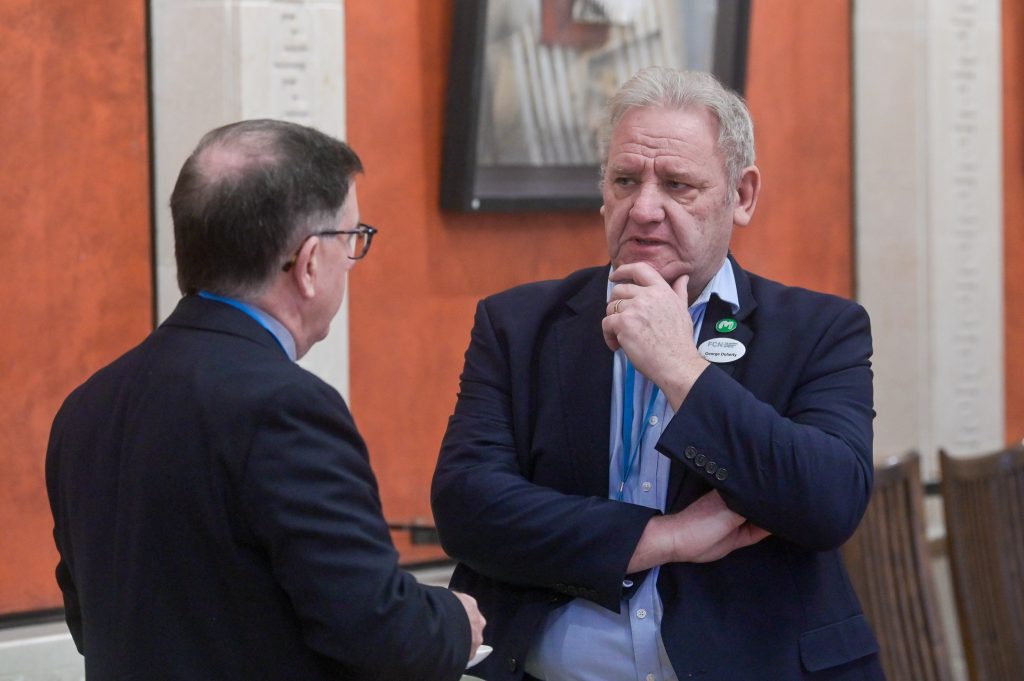
George Doherty is the FCN / Macmillan Programme Officer (Northern Ireland). George’s wife, Tracey, is an FCN volunteer helping to support on the Project. In this clip George shares his lived experience with bowel cancer. Click here to watch George’s story.
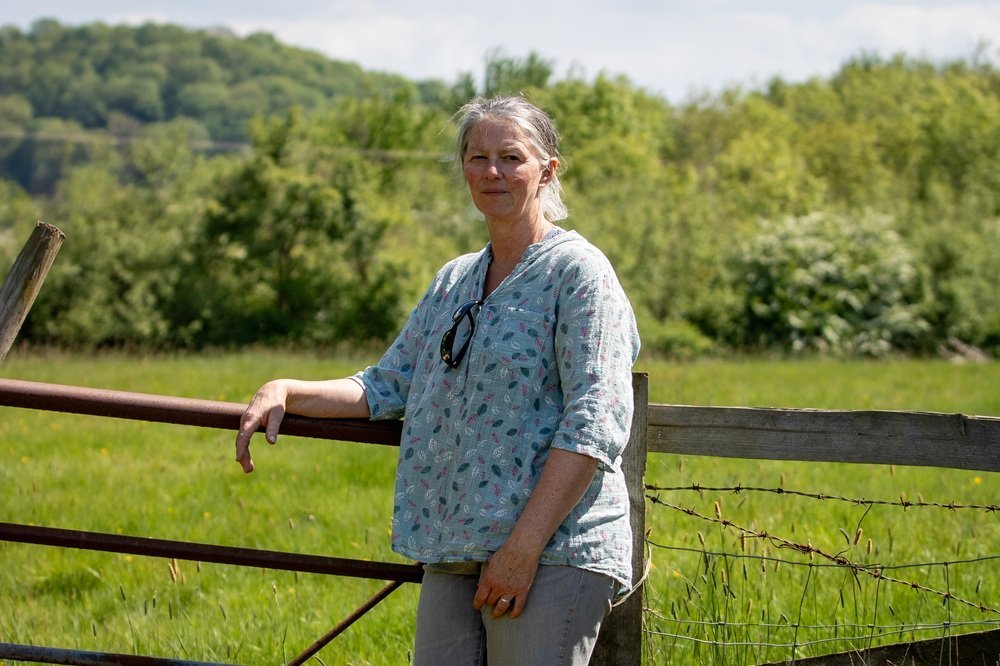
Jane Gardner, a sheep farmer living in Warwickshire, has shared her story after being diagnosed with basal cell carcinoma, a form of skin cancer. Jane noticed a red mark on her cheek that was progressively getting bigger, itchier, and occasionally painful. Click here to read Jane’s story.
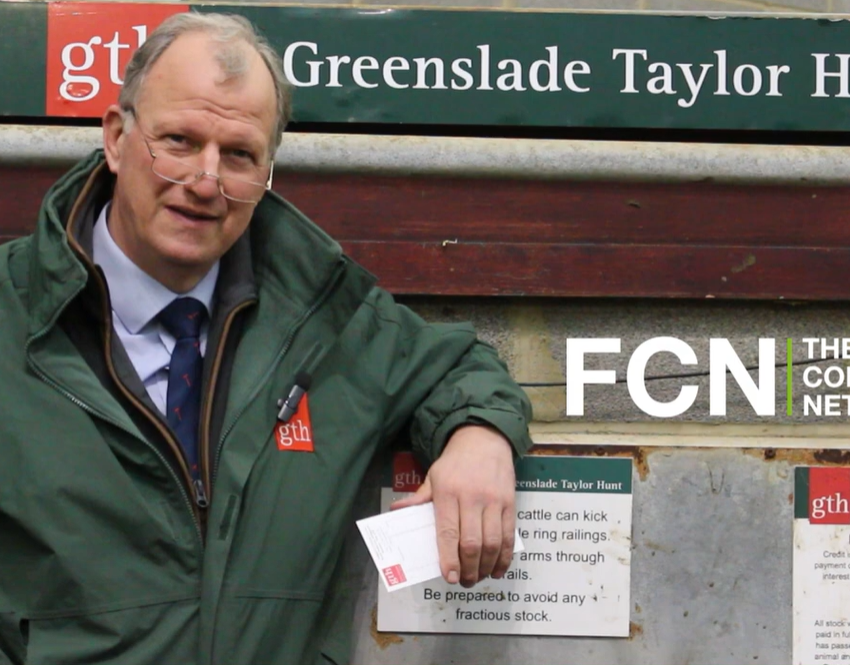
Sedgemoor Market auctioneer Rob Venner has shared his personal experience of being diagnosed with prostate cancer as part of FCN’s #NipItInTheBud campaign with Macmillan Cancer Support. In this video Rob shares his detailed story of diagnosis, treatment and recovery. Click here to watch Rob’s story.
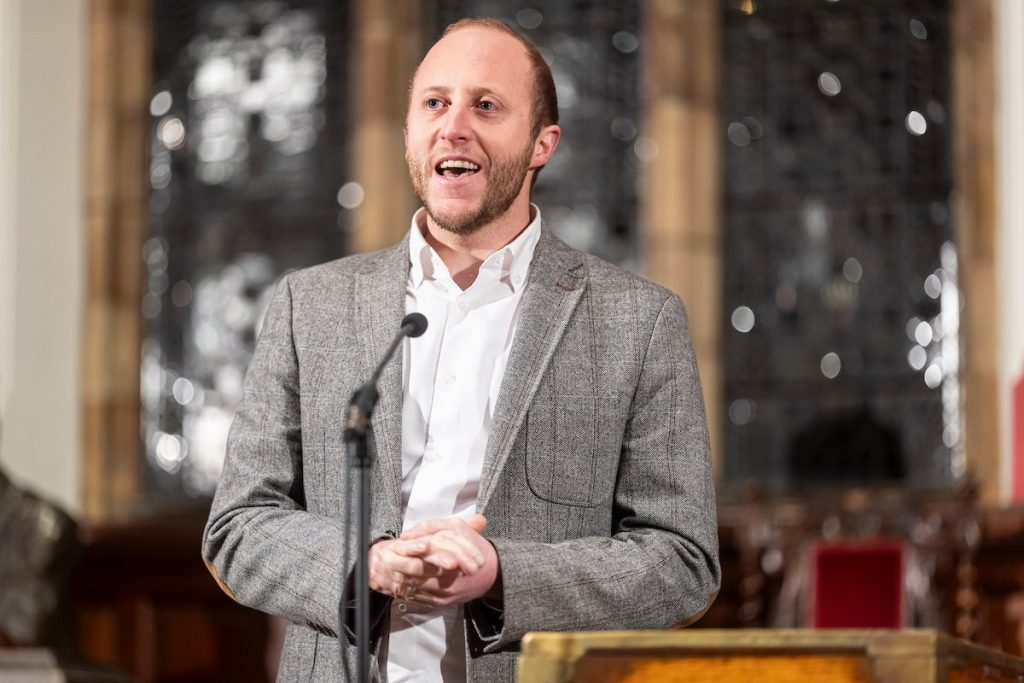
Dairy farmer Andy Venables shared his diagnosis of testicular cancer at the Oxford Farming Conference in January 2026, after noticing a swelling in one of his testicles. Click here to watch Andy’s video.
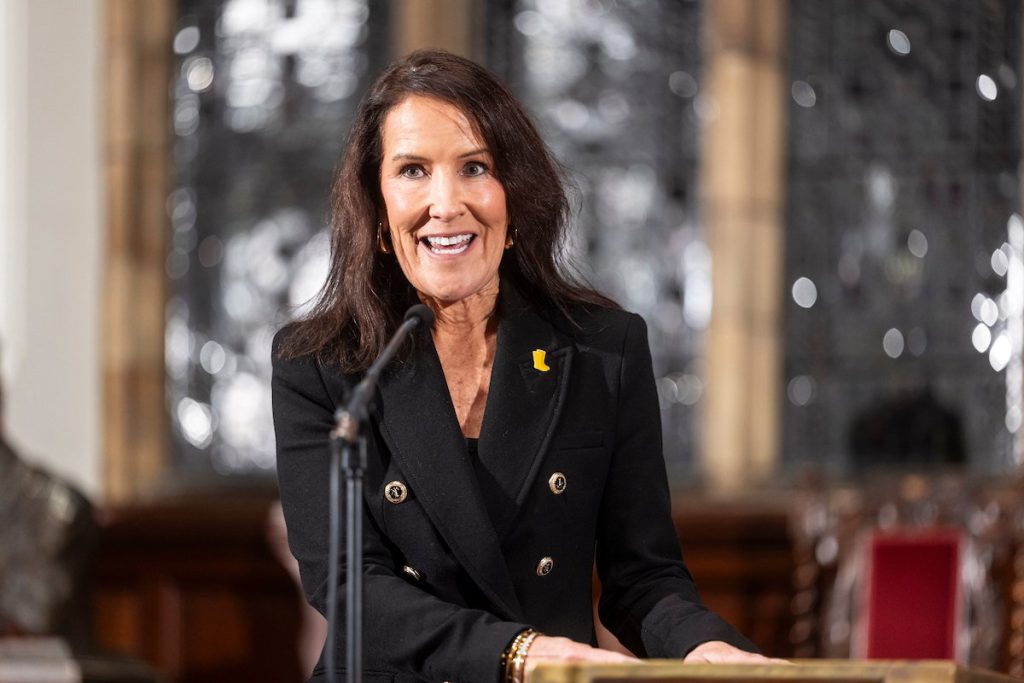
Stephanie Berkeley from the Farm Safety Foundation shared her diagnosis of basal cell carcinomas and squamos cell carcinomas at the Oxford Farming Conference in January 2026. In 2017 after an annual flu jab Stephanie mentioned to the nurse that she had large freckle-like marks on her skin. She was diagnosed with cancer after follow-up tests. Click here to watch Stephanie’s video.
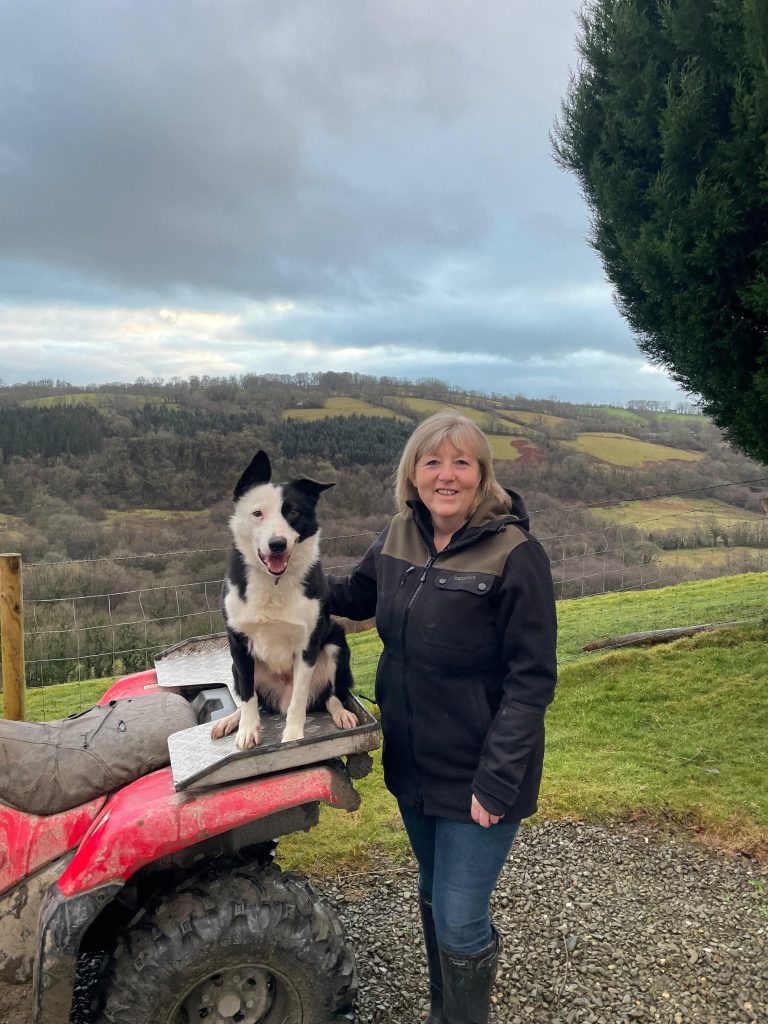
Ceredigion sheep farmer Carol Hope was diagnosed with breast cancer after noticing a lump in her breast the night before Christmas 2021. After visiting a GP, Carol had a mammogram, ultrasound and biopsy, which confirmed she had breast cancer. Click here to read Carol’s story and watch her video (in Welsh with subtitles).
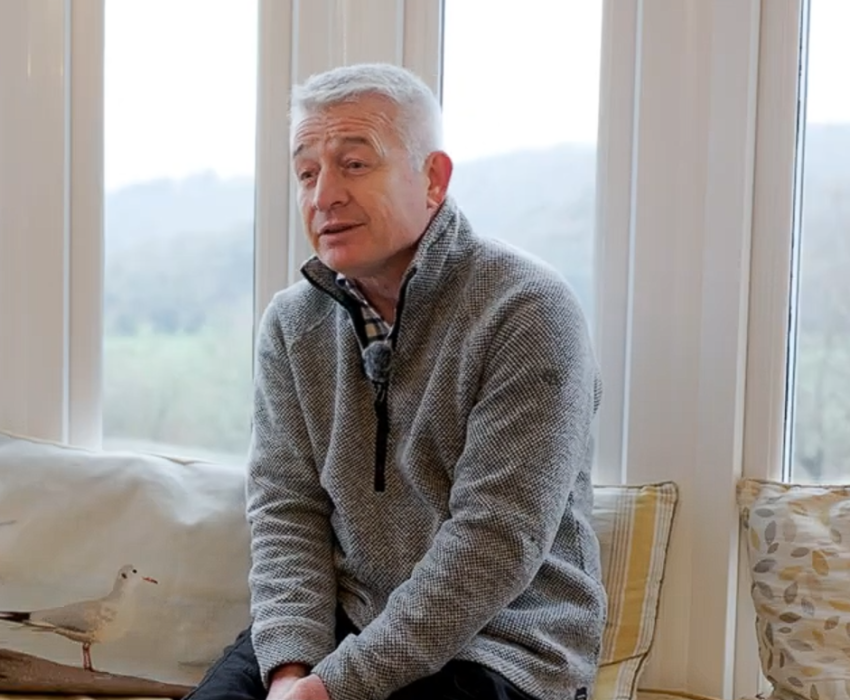
Retired Welsh agricultural consultant Nigel Davies, who cared for his wife through terminal brain cancer, shared his story with FCN during Carers Week. Click here to read Nigel’s story and watch his video (in Welsh with subtitles).
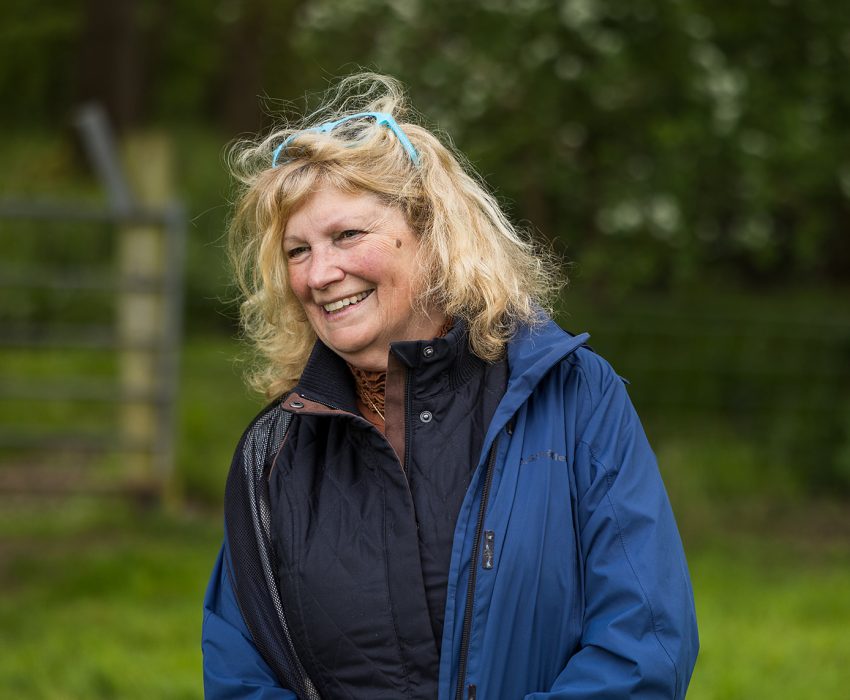
A Warwickshire farming couple’s experience with cancer treatment has brought into focus the invaluable support offered by Macmillan Cancer Support. For Martin and Karen, their cancer journey began in true farming style – with the weather. A rare Warwickshire snowfall in January 2010 sent both home from work, setting off a chain of events that would ultimately save Martin’s life. Click here to watch a video and read more.
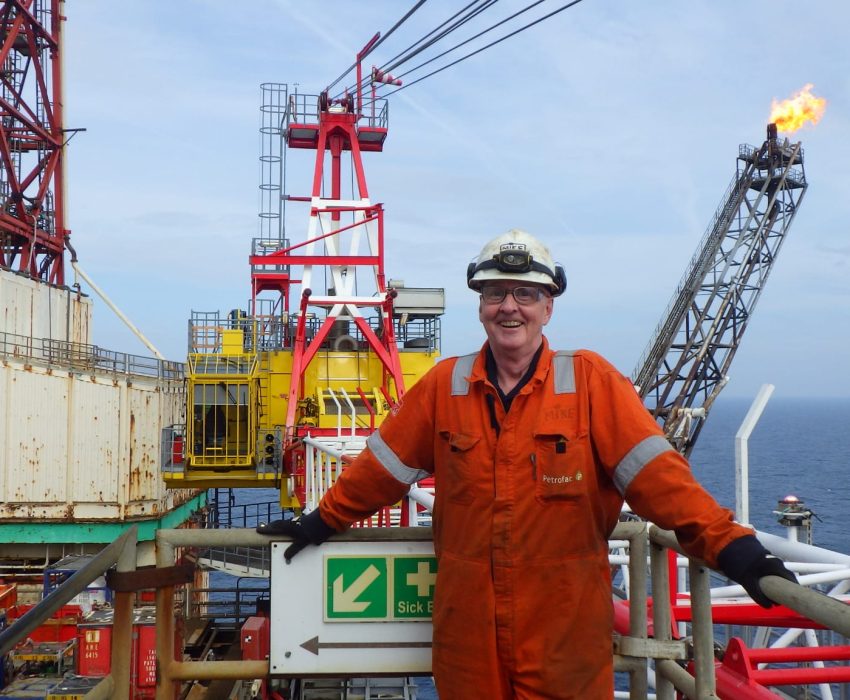
In 2023, Mike Murdoch was working as an Electrical Technician offshore on the Clyde oil rig, on a ‘3 week on, 3 week off’ cycle. He started noticing some changes in his health, which included having to get up through the night to urinate numerous times. Then he found he was having trouble urinating.
Following a series of tests, Mike was diagnosed with Stage 4 Prostate Cancer which had spread to his bladder, ribs and lymph nodes. Mike started chemotherapy in early 2024. Read Mike’s story here.
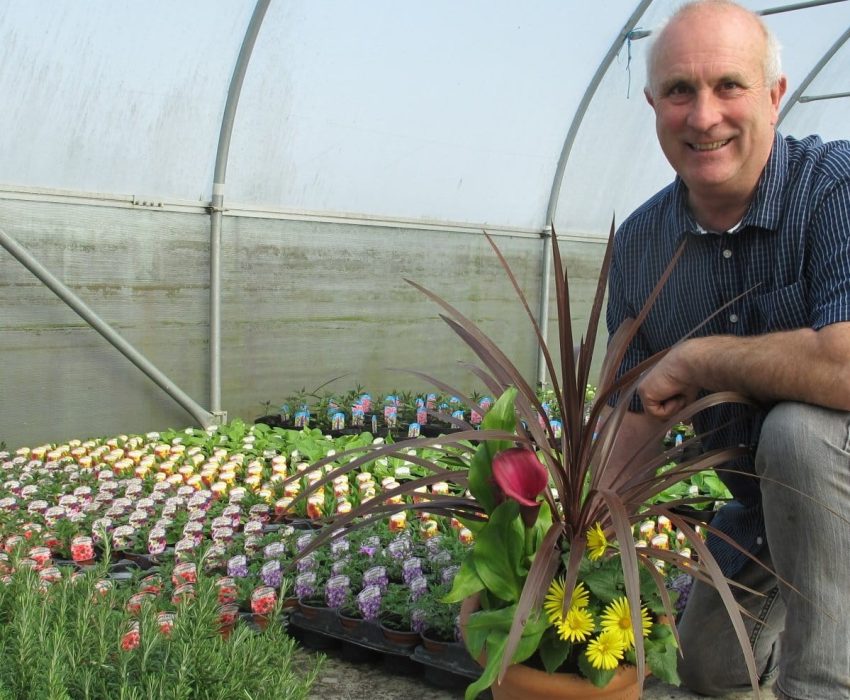
Robert Bendall, a third-generation Suffolk farmer, maintained a positive outlook and continued managing his farm as long as possible after receiving a late-stage bowel cancer diagnosis. To protect his family’s legacy, he prioritised succession planning, ensuring the business successfully transitioned to the next generation after his passing. Read Robert’s story here.
A5 flyers
Download a range of flyers to help to promote the FCN/Macmillan partnership, as well as the many ways you can get involved in our ‘Nip it in the Bud’ campaign.
Social media graphics
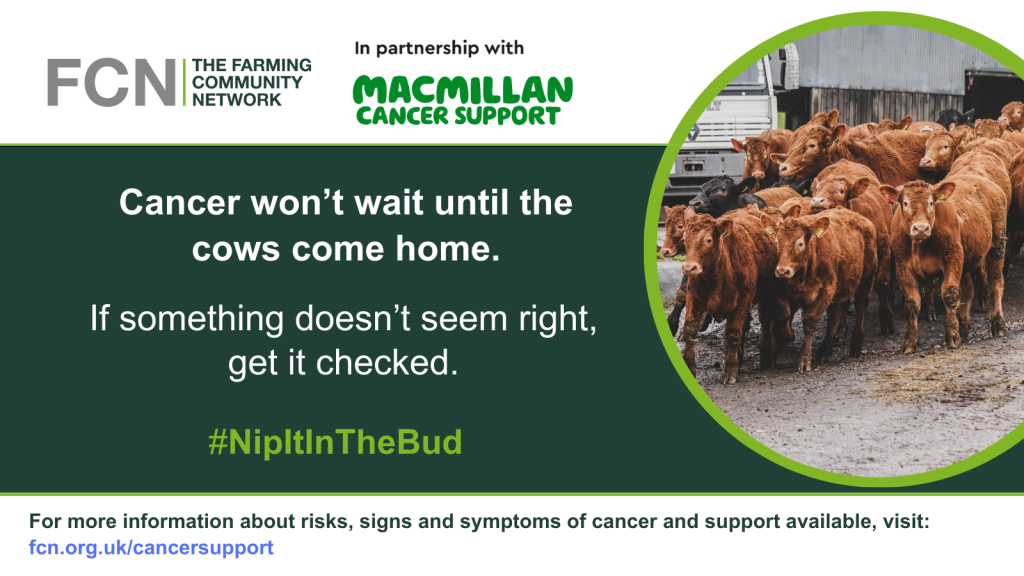
Download graphics for social media, adverts, newsletters etc. which can be used to raise awareness of the ‘Nip it in the Bud’ campaign and the importance of getting checked if something doesn’t feel right.
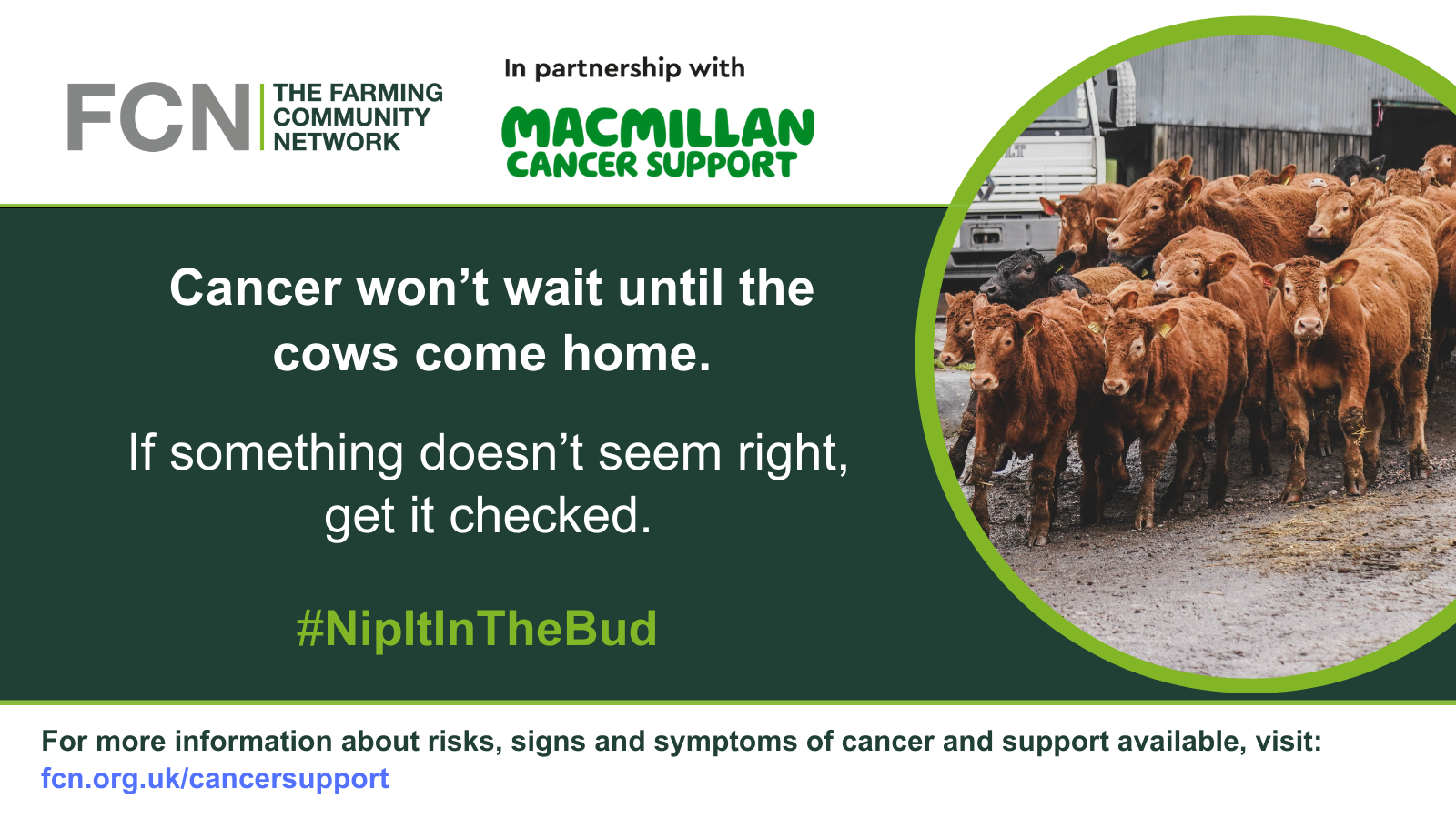
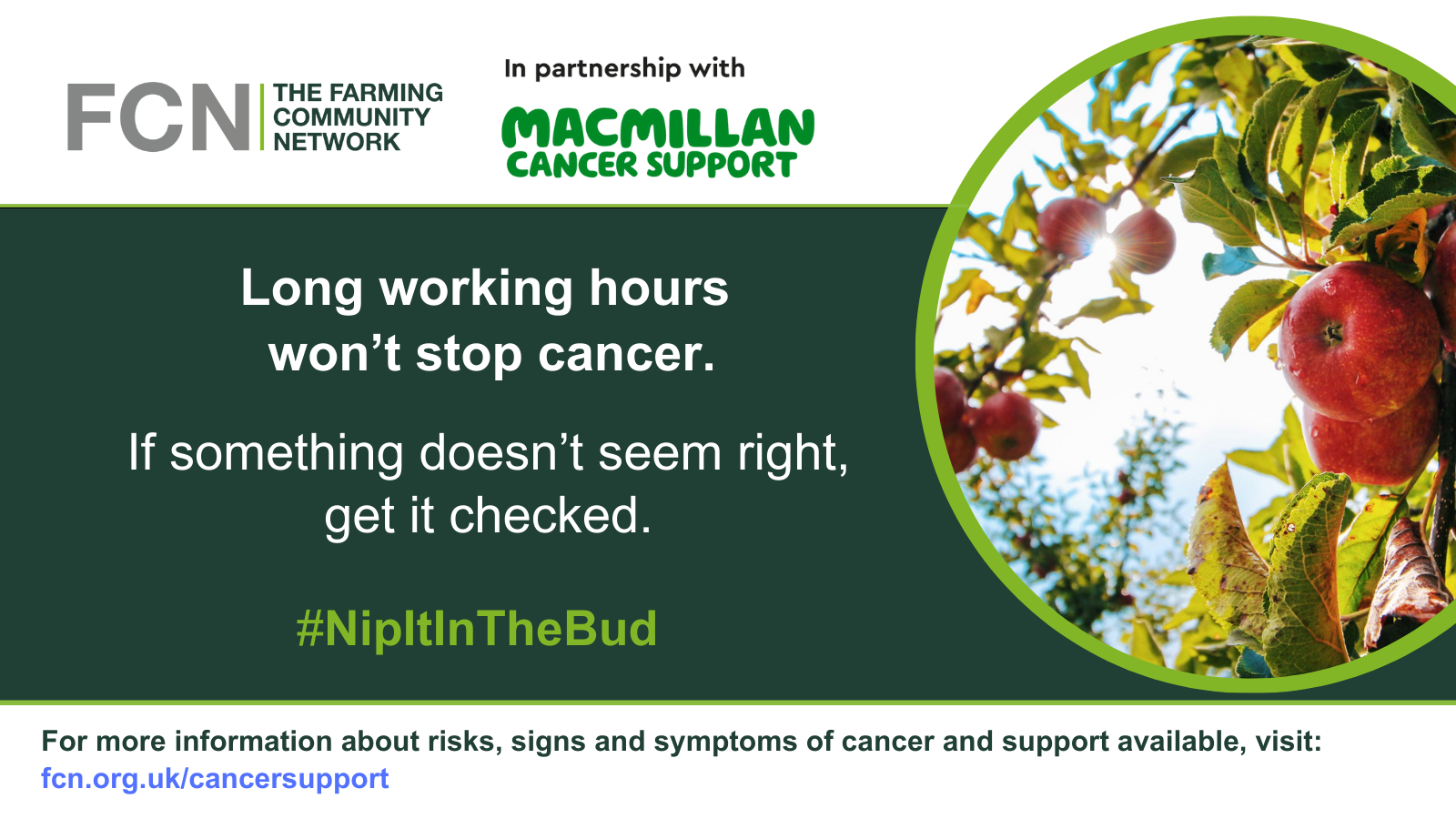



Signs and symptoms of cancer – what to check for

Download a guide on what to check for here
Interactive resources
We have developed a number of interactive resources that can be downloaded and printed off – these are ideal for Young Farmers’ Clubs, agricultural colleges and other situations where you would like to raise awareness of cancer amongst your audience.
Higher Lower Quiz – Based on agricultural and cancer facts and figures to get people thinking of some key cancer statistics.
Macmillan Medical Terms Pair Up Game – A pair up game to discuss and familiarize terms often heard accompanied with a cancer diagnosis. Raising awareness and knowledge of such terms outside of a medical environment.
Scenario Activity – Macmillan and FCN scenarios for groups to troubleshoot and discuss; and then act out the scene. A great opportunity for groups to discuss relevant topics and to give ideas of how they could help, or how Macmillan or farming support charities could help.
Information about cancer and promotional posters
(Information republished from NHS / Macmillan Cancer Support)
Cancer is a condition where cells in a specific part of the body grow and reproduce uncontrollably. The cancerous cells can invade and destroy surrounding healthy tissue, including organs. Cancer sometimes begins in one part of the body before spreading to other areas. This process is known as metastasis. 1 in 2 people will develop some form of cancer during their lifetime. There are more than 200 types of cancer.
You can access information about different types of cancer on the Macmillan website.
Below are some of the most commonly diagnosed cancers in the UK, which will be among the cancers FCN focuses on throughout the duration of this campaign.
Prostate cancer
Prostate cancer starts in the cells of the prostate. The prostate is a small gland that is just below the bladder and in front of the rectum. Prostate cancer is a common cancer. In the UK about 48,600 men are diagnosed with it each year. Prostate cancer is more common over the age of 65. Learn more about prostate cancer on the Macmillan website.
Download our ‘Nip it in the Bud’ poster to raise awareness of prostate cancer:
Skin cancer
Most skin cancers are caused by skin damage that happens from exposure to the sun. The damage can happen from sun exposure over a long period of time or from a history of getting sunburnt. People with a history of sunburn or overexposure to the sun in childhood also have a greater risk of developing both basal cell carcinoma and squamous cell carcinoma. Because people are living longer, they are exposed to more sun over their lifetimes. Learn more about skin cancer on the Macmillan website.
Download our ‘Nip it in the Bud’ poster to raise awareness of skin cancer:
Bowel cancer
The bowel is part of the digestive system and is divided into the small bowel and large bowel. The large bowel is made up of the colon, rectum and anus. The term bowel cancer is normally used to talk about:
- colon cancer
- rectal cancer.
The term bowel cancer can also be used when talking about other cancers, including:
- anal cancer
- small bowel cancer
- anorectal melanoma cancer.
Learn more about bowel cancer on the Macmillan website.
Download our ‘Nip it in the Bud’ poster to raise awareness of bowel cancer:
Lung cancer
The lungs are the parts of the body that we use to breathe. Lung cancer is the third most common cancer in the UK. About 46,400 people are diagnosed with it each year.
There are two main types of primary lung cancer. These are:
- non-small cell lung cancer (NSCLC)
- small cell lung cancer (SCLC).
Sometimes cancer spreads to the lungs from somewhere else in the body. This is called lung metastases or secondary lung cancer. Learn more about lung cancer on the Macmillan website.
Download our ‘Nip it in the Bud’ poster to raise awareness of lung cancer:
Breast cancer
Each year, about 55,000 women are diagnosed with breast cancer in the UK. It is more common in women over 50, but it can also affect younger women. Breast cancer can be invasive or non-invasive (in-situ). When people talk about breast cancer, they usually mean invasive breast cancer. This is when cancer cells have spread outside the milk ducts or lobules in the breasts where they started, into surrounding breast tissue. Read more about breast cancer in women on the Macmillan website.
Men can get breast cancer. Most breast cancers in men are invasive. This means the cancer cells have spread outside the lining of the ducts of the breast and into surrounding breast tissue. There are different types of invasive breast cancer. Read more about breast cancer in men on the Macmillan website.
Download our ‘Nip it in the Bud’ poster to raise awareness of breast cancer:
Survey
Take our survey to help FCN to better understand current cancer service provisions in rural areas, whilst encouraging people to provide recommendations and suggestions for improvement: https://www.surveymonkey.com/r/W9DQM5M

Testimonials